Request a Consult | 703-553-1099
Small business owners know that every dollar saved in taxes is a dollar reinvested in growth – but many don’t know the full range of available deductions. Understanding which expenses qualify as tax deductions can significantly lower your taxable income and improve your bottom line.
While tax deductions vary depending on your business structure and expenses, here are 20 common write-offs you may be able to use, along with our Wendroff Pro Tips to maximize your savings:
If you launched your business recently, you can deduct up to $5,000 in startup costs, including legal fees, market research, and advertising. However, the $5,000 deduction begins to phase out dollar-for-dollar if your total startup expenses exceed $50,000. If your startup expenses reach $55,000 or more, you cannot take the immediate $5,000 deduction and must amortize all startup costs over 15 years (180 months) instead.
It’s important to distinguish between startup costs and organizational costs, as each category allows for a separate deduction of up to $5,000, subject to the same phase-out rules.
💡 Wendroff Pro Tip: If your startup expenses exceed $5,000, consulting with a tax professional can help you develop a strategy to maximize your deduction while ensuring compliance with IRS regulations. To accelerate your ability to deduct these expenses, try to generate revenue as soon as possible—doing so may move your business out of “startup” status. Even if you don’t earn revenue right away, your intent to operate and earn income can qualify your business as active, allowing you to deduct expenses immediately.
If you operate your business from home, you may qualify for a home office tax deduction. The workspace must be used exclusively and regularly for business purposes. There are two methods to calculate this deduction:
💡 Wendroff Pro Tip: Ensure your home office space is clearly defined and used solely for business activities. Maintain detailed records and documentation of your expenses, as the IRS requires substantiation for all deductions claimed. Here is a simple spreadsheet we created to track these expenses: Home Office Expenses
If your business rents office, retail, or warehouse space, you can deduct the full cost of rent as a business expense. This deduction applies to lease agreements with unrelated parties and must reflect a fair market rate.
Additionally, essential utility expenses such as electricity, water, gas, internet, and phone services used for business purposes are tax-deductible. To claim these deductions, ensure that these expenses are directly tied to your business operations and properly documented.
💡 Wendroff Pro Tip: Ensure your rental agreement is formalized and reflects fair market value. The IRS scrutinizes below-market rent arrangements, which could limit your deduction eligibility. Keeping detailed records of payments and lease agreements can help substantiate your deductions.
Business-related office supplies—such as pens, paper, printer ink, and other consumables—are fully deductible in the year they are purchased. These everyday essentials are considered ordinary and necessary business expenses, making them simple to track and claim as deductions.
For minor equipment purchases, such as small electronics, office chairs, and accessories that do not meet the criteria for long-term depreciation, businesses may also take an immediate deduction under Section 179 if the total cost falls within the allowable limit.
Larger business assets, such as company vehicles, industrial machinery, and high-cost office furniture, require depreciation over multiple years. These items are covered below under item “12: Depreciation of Business Assets” and may be eligible for Section 179 or bonus depreciation.
💡 Wendroff Pro Tip: Maintain clear records of all office supply purchases, including receipts and expense logs, to ensure proper tax documentation. Higher-cost equipment exceeding $2,500, which is more than the de minimis amount, could be a depreciated asset. It’s important to consult with a tax professional to determine whether immediate expensing or depreciation offers the best financial advantage.
Premiums paid for various business-related insurance policies are generally deductible as ordinary and necessary business expenses. This includes:
These premiums are deductible in the tax year they are paid, provided the insurance is directly related to your business operations.
💡 Wendroff Pro Tip: While most business insurance premiums are deductible, certain types—such as premiums for a life or disability insurance for lost income—may not be. Consult with a tax professional to understand which premiums are deductible for your specific business circumstances.
If you have employees, their compensation—including salaries, wages, and bonuses—is generally deductible as a business expense in the year it’s paid or incurred.
Additionally, employer contributions to employee benefits, such as health insurance premiums, retirement plans (e.g., 401(k) or pension plans), and other fringe benefits, are also tax-deductible, provided they are reasonable, necessary, and directly related to the business operations.
💡 Wendroff Pro Tip: For accrual-basis taxpayers, to deduct bonuses in the current tax year, ensure they are fixed and determinable by year-end and paid within 2½ months after the year ends. Be cautious with bonuses contingent on future events, like continued employment, as they may not qualify for deduction until the payment year.
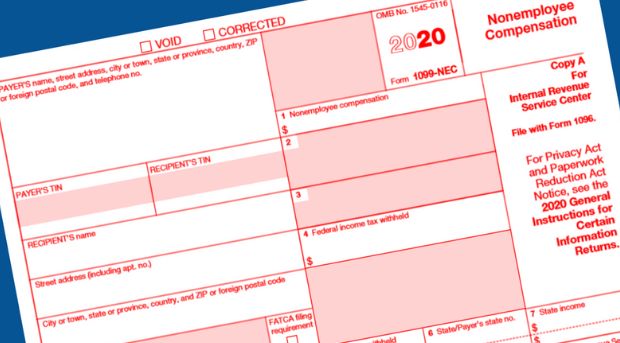
Payments made to freelancers or independent contractors for services rendered are deductible business expenses. If you pay an individual $600 or more in a calendar year, you’re required to report these payments to the IRS using Form 1099-NEC (Nonemployee Compensation). This form must be filed with the IRS and a copy provided to the contractor by January 31 of the following year.
💡 Wendroff Pro Tip: Ensure you obtain a completed Form W-9 from each contractor before issuing payment. This form provides the necessary taxpayer identification information needed for accurate 1099-NEC reporting. Additionally, starting with the 2024 tax year, if you file 10 or more information returns (including Forms 1099-NEC), you’re required to file them electronically. Here’s a service that could potentially help you E-File Magic.
Expenses incurred for advertising and marketing efforts aimed at promoting your business are generally fully deductible as ordinary and necessary business expenses. This includes costs associated with:
💡 Wendroff Pro Tip: While most advertising expenses are deductible, ensure that the expenses are directly related to your business activities and are not for personal purposes. Additionally, certain expenses, such as those intended to influence legislation (lobbying), are not deductible. Maintaining detailed records and receipts for all advertising and marketing expenditures will support your deductions in the event of an audit.
Expenses incurred for business travel are deductible, provided they are ordinary, necessary, and directly related to your trade or business. Deductible travel expenses include:
See the IRS Guidelines for the latest rules on these deductions: Publication 463 (2024), Travel, Gift, and Car Expenses
💡 Wendroff Pro Tip: Instead of tracking actual meal expenses, you can opt to use the standard meal allowance, which is the federal per diem rate for meals and incidental expenses. This rate varies by location and is updated annually. For travel starting October 1, 2024, the per diem rate for high-cost localities is $319, which includes $86 for meals and incidental expenses. Utilizing the per diem rates can simplify record-keeping and ensure compliance.
Fees paid to professionals—such as accountants, attorneys, consultants, and other experts—are generally fully deductible as ordinary and necessary business expenses, provided they are directly related to your business operations. This includes costs for services like tax preparation, legal advice, marketing, and business consulting.
💡 Wendroff Pro Tip: While most professional service fees are deductible, those incurred for acquiring capital assets—such as fees related to purchasing property or equipment—are not immediately deductible. Instead, these costs should be added to the asset’s basis and recovered through depreciation over time.
For business owners, investing in education—whether for yourself or your employees—can be a smart tax-saving strategy. Expenses for workshops, certifications, and continuing education that maintain or improve skills necessary in your current trade or business are generally tax-deductible. To qualify for a deduction, the education must meet at least one of the following criteria:
However, education expenses are not deductible if:
For instance, if you’re a CPA, taking an advanced tax strategy course is deductible; going to law school is not.
Bonus for Employers: Business owners can also establish Educational Assistance Programs that allow for up to $5,250 per employee per year in tax-free educational benefits—regardless of the subject matter. These programs benefit both the employer and the employee: employers get a deduction for the expense, and employees receive tax-free education assistance. This applies to tuition, fees, books, supplies, and even student loan repayment assistance.
By thoughtfully investing in education, business owners can strengthen their operations, support employee development, and reduce their tax burden all at once.
💡 Wendroff Pro Tip: If you’re seeking advanced education as the business owner, keep detailed records of all expenses—including tuition, books, supplies, and transportation—as proper documentation is essential to support your deduction claims. If you have employees, consider setting up an Educational Assistance Program. You can offer up to $5,250 per employee per year in tax-free benefits (including tuition or student loan repayment), while your business still gets the full deduction. It’s a win-win for your team and your tax strategy.
Larger business assets—such as vehicles, heavy machinery, and high-cost office furniture—are typically depreciated over time, allowing you to recover their costs through annual deductions.
The IRS provides two primary methods to accelerate depreciation for qualifying assets:
Smaller business purchases usually less than $2500, such as office supplies and minor equipment that do not require depreciation, are covered in item “4: Office Supplies and Minor Equipment” and can often be deducted immediately.
💡 Wendroff Pro Tip: If you plan to invest in significant business assets, carefully assess whether Section 179 or bonus depreciation offers the best financial benefit. Consulting a tax professional can help determine the optimal strategy to maximize deductions and cash flow while ensuring compliance with IRS regulations.
Interest paid on business loans, lines of credit, and business credit cards is generally tax-deductible, provided the funds are used exclusively for business purposes. This includes interest on loans taken to purchase business assets, finance operations, or cover other business-related expenses.
It’s important to note that only the interest portion of your payments is deductible, not the principal repayment. Additionally, to qualify for the deduction, you must be legally liable for the debt, there must be a true debtor-creditor relationship between you and the lender, and both parties must intend for the debt to be repaid.
💡 Wendroff Pro Tip: Maintain clear and detailed records of all loan agreements, interest payments, and the specific business purposes for which the borrowed funds were used. This documentation is needed to substantiate your deductions in the event of an audit. Additionally, be aware that while interest on business-related debt is deductible, interest on loans used for personal expenses is not. Therefore, it’s advisable to keep personal and business finances separate to ensure accurate reporting and maximize your eligible deductions.
If your business extends credit to customers and is unable to collect payment, you may be eligible to deduct the uncollectible amounts as bad debts. To qualify for this deduction, the debt must have been previously included in your business income or represent an actual cash outlay, and there must be a bona fide creditor-debtor relationship. Bad debts can be categorized as either totally worthless or partially worthless:
💡 Wendroff Pro Tip: To substantiate a bad debt deduction, maintain thorough documentation, including records of the original transaction, efforts made to collect the debt, and any information indicating the debtor’s financial condition. This evidence is needed to support your deduction in the event of an IRS audit. Additionally, ensure that the debt is indeed a bona fide loan and not a gift or contribution, as only legitimate debts qualify for this deduction.
Donations made to IRS-qualified nonprofit organizations are generally tax-deductible; however, the rules for claiming these deductions vary depending on your business structure:
💡 Wendroff Pro Tip: To maximize tax benefits, consider donating appreciated assets, such as stocks or real estate, held for more than one year. This strategy allows your business to deduct the fair market value of the asset while potentially avoiding capital gains tax on the appreciation.
Always ensure that the recipient organization is an IRS-qualified charity and maintain thorough records of all contributions, including receipts and written acknowledgments, to substantiate your deductions.
For C Corporations and Limited Liability Companies (LLCs), expenses incurred from relocating business operations—such as moving equipment, supplies, and inventory—are generally deductible as ordinary and necessary business expenses. These deductible expenses can include costs for transportation, packing, loading, and even brokerage commissions related to the move.
However, for sole proprietors and partners in partnerships, the deduction for moving expenses is subject to stricter criteria. The Tax Cuts and Jobs Act of 2017 suspended the moving expense deduction for most taxpayers from 2018 through 2025.
Currently, only active-duty military members moving due to a permanent change of station are eligible to deduct moving expenses on their federal tax returns.
💡 Wendroff Pro Tip: While federal deductions for moving expenses are limited, some states may still allow deductions for business-related moving expenses. Consult with a tax professional to understand both federal and state tax implications of your business relocation. Additionally, maintain detailed records of all moving-related expenses, including receipts and contracts, to support any deductions claimed and ensure compliance with current tax laws.
Expenses for business-related software, cloud services, and industry-specific subscriptions are generally tax-deductible. The deductibility and timing depend on the nature of the software or service:
💡 Wendroff Pro Tip: Maintain detailed records of all software and subscription expenses, including invoices and proof of business use. For mixed-use software (both personal and business), deduct only the portion attributable to business use. Regularly review your subscriptions to ensure they remain necessary and cost-effective for your operations.
If you use a vehicle for business purposes, you have two options for deducting related expenses:
💡 Wendroff Pro Tip: Choosing between the standard mileage rate and the actual expense method depends on your specific circumstances. Generally, the standard mileage rate is simpler to use and may be beneficial for vehicles with lower operating costs. However, if your vehicle has higher expenses or is used predominantly for business, the actual expense method might yield a larger deduction. It’s important to note that if you opt for the standard mileage rate in the first year the vehicle is used for business, you retain the flexibility to choose either method in subsequent years. Conversely, if you select the actual expense method initially, you must continue using it for that vehicle in future years. Consulting with a tax professional can help determine the most advantageous method for your situation.
Fees paid for business licenses, permits, trademarks, and regulatory compliance are generally deductible business expenses.
💡 Wendroff Pro Tip: Maintain detailed records and receipts for all legal and licensing expenditures. Proper documentation supports your deduction claims and ensures compliance with IRS regulations.
Contributions to retirement plans such as SEP IRAs, SIMPLE IRAs, and 401(k) plans for yourself and your employees are tax-deductible, offering both immediate tax savings and long-term financial security.
The specific contribution limits and rules vary by plan type:
Additionally, as of 2022, small businesses can take advantage of the new employer contribution tax credit aimed at making it easier to be more retirement-friendly. Eligible employers may be able to claim a tax credit of up to $5,000, for three years for the ordinary and necessary costs of starting a SEP, SIMPLE IRA, or qualified plan, such as a 401(k). Learn more: Retirement Plans Startup Costs Tax Credit.
💡 Wendroff Pro Tip: Establishing a retirement plan offers tax benefits and helps attract and retain top talent. Regularly review and adjust contribution levels to maximize tax advantages and ensure compliance with current IRS regulations. Consulting with a tax professional can provide personalized guidance tailored to your business’s financial goals and help navigate the complexities of retirement plan contributions. By strategically managing retirement plan contributions, you can enhance your financial security and that of your employees while optimizing tax benefits for the 2025 tax year.
Taking full advantage of these small business tax deductions can help lower your taxable income and increase profitability. Because tax laws frequently change and tax deductions vary among businesses, we recommend consulting with a tax professional for guidance about your unique situation. Contact our team using the Free Consult button below for help with your 2025 business taxes.