Request a Consult | 703-553-1099
Tax season officially kicks off on January 29 this year, and federal tax returns are due on April 15th (with some exceptions). Make sure you’re prepared and avoid costly mistakes with our comprehensive list of tax dates, deadlines, extension dates, and links to tax filing forms for individuals and businesses in 2024.
State income tax return deadlines for 2023 typically follow federal deadlines, with some exceptions. For example, residents of Virginia have until May 1 to file state income tax returns. It’s important to check with your state’s tax and revenue authority for accurate information.
Employees who work for tips—if you received $20 or more, you should report all tips earned in the previous month to your employer using Form 4070. If the 10th falls on a weekend or holiday, then the report should be submitted to the employer on the next business day.
If an employer is required to pay monthly payroll taxes, businesses should deposit all Social Security, Medicare, and withheld income tax collected during the previous month.
Individuals—who did not pay federal income tax the previous year through withholdings (or didn’t pay enough) should make their estimated tax payment by this date using Form 1040-ES.
Farmers and fishermen—should pay their federal estimated tax for 2023 using Form 1040-ES. If you don’t pay your estimated tax by January 16, you must file your 2023 return and pay any tax due by March 1, 2024, to avoid an estimated tax penalty.
IRS begins accepting and processing 2023 returns.
Employer—deadline to provide employees who worked for the business in the previous year with their W2 forms. Also, any business that paid out reportable gambling winnings or withheld federal income tax from gambling winnings paid, should send to those winners Forms W2G by this date.
All employers—should file Form W3, Transmittal of Wage and Tax Statements, along with Copy A of all the W2s issued for 2023 by Jan. 31st, 2024.
Individuals who make estimated tax payments—if taxpayers didn’t pay the last installment of federal estimated tax by January 16, may choose to file their income tax return (Form 1040 or Form 1040-SR) for 2023 by January 31. Filing and paying any tax due by January 31st prevents any penalty for late payment of the last installment.
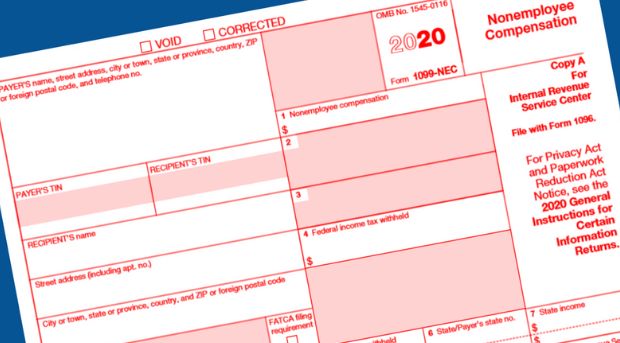
Business payers of non-employee compensation—File Form 1099-NEC for nonemployee compensation paid in 2023.
Employers whose annual payroll tax liability is $1,000 or less—use File Form 944 (or Form 943 for Farm employers) to report social security and Medicare taxes and withheld federal income tax for 2023.
However, if you deposited the tax for the year timely, properly, and in full, you have until February 10, 2024 to file the return.
File Form 940 to report your annual Federal Unemployment Tax Act (FUTA) tax by January 31, 2024. If your undeposited tax is $500 or less, you can either pay it with your return or deposit it. If it is more than $500, you must deposit it. However, if you deposited the tax for the year timely, properly, and in full, you have until February 12, 2024 to file the return.
Businesses—Informational returns such as 1099-Bs (for income earned from the sale of certain securities) and certain 1099-MISC forms must be sent to recipients by this date. See IRS General Instructions for Certain Information Returns (2023) for more information.
Individuals—who claimed exemption from income tax withholding last year on the Form W-4 must file a new Form W-4 by this date to continue their exemption for another year.
Large food and beverage establishment employers—file Form 8027, Employer’s Annual Information Return of Tip Income and Allocated Tips, by February 29, 2024. Use Form 8027T to summarize and transmit Forms 8027 if you have more than one establishment. If you file Forms 8027 electronically, your due date for filing them with the IRS is March 31, 2024.
Farmers & fishermen—file your 2023 income tax return (Form 1040 or Form 1040-SR) and pay any tax due. However, you have until April 15, 2024 to file if you paid your 2023 estimated tax by January 16, 2024.
Partnerships—file a 2023 calendar year return Form 1065.
S Corporations—file a 2023 calendar year income tax return Form 1120-S.
S Corporation Election—file Form 2553 to elect to be treated as an S Corporation beginning with the calendar year 2024.
Form 7004 – file this form to apply for an automatic six-month extension to file 2023 S Corporation and Partnership.
Individuals—file a 2024 Form 1040 or Form 1040-SR and pay any tax due. If you want an automatic 6-month extension to file the return, file Form 4868 and pay what you estimate you owe in tax to avoid penalties and interest.
The extension is for filing Form 1040 or Form 1040-SR by October 15, 2024, not for payment. If you estimate you owe taxes, you can pay the amount with Form 4868.
Also, if you’re not paying your 2024 income tax through withholding (or won’t pay enough tax during the year), pay the first installment of your 2024 estimated federal tax. Use Form 1040-ES.
Corporations—file a 2023 calendar year income tax return Form 1120 and pay any tax due. If you want an automatic 6-month extension to file the return, file Form 7004 and deposit what you estimate you owe for the year 2023. Also, deposit the first installment of the estimated federal income tax for 2024.
Household employers—if you paid cash wages of $2,400 or more in 2023 to a household employee, you must file Schedule H (Form 1040), Household Employment Taxes.
If you’re required to file a federal income tax return (Form 1040 or Form 1040-SR), file Schedule H (Form 1040) with the return and report any household employment taxes.
Report any federal unemployment (FUTA) tax on Schedule H (Form 1040) if you paid total cash wages of $1,000 or more in any calendar quarter of 2022 or 2023 to household employees. Also, report any income tax you withheld for your household employees.
Trust and Estates—file fiduciary income tax return (Form 1041) for the calendar year 2023.
Non-Profit (Exempt) Organizations—file Form 990 for the 2023 calendar year. An automatic six-month extension can be requested by filing Form 8868 by May 15, 2024.
Individuals—make an estimated tax payment for 2024 if you’re not paying your income tax for the year through withholding (or won’t pay enough tax). Use Form 1040-ES. This is the second installment date for estimated federal tax for 2024.
U.S. citizens or resident aliens living and working (or on military duty) outside the United States and Puerto Rico—file Form 1040 or Form 1040-SR and pay any tax, interest, and penalties due.
If you want additional time to file your return, file Form 4868 to request an additional four months to file. Pay what you estimate you owe in tax to avoid penalties and interest. Then, file Form 1040 or Form 1040-SR by October 15, 2024.
However, if you’re a participant in a combat zone, you may be able to further extend the filing deadline.
Corporations—deposit the second installment of estimated federal income tax for 2024.
Individuals—make an estimated tax payment for your 2024 if you’re not paying your income tax for the year through withholding (or won’t pay enough tax). Use Form 1040-ES. This is the third installment date for estimated federal tax for 2024.
Partnerships—file a 2023 calendar year return (Form 1065). This due date applies only if you requested an automatic 6-month extension on time. Otherwise, see Partnerships under March 15, 2024 earlier.
S Corporations—file a 2023 calendar year income tax return (Form 1120-S). This due date applies only if you timely requested an automatic 6-month extension to file the return. Otherwise, see S corporations under March 15, 2024 earlier.
Individuals—if you have an automatic 6-month extension to file your income tax return for 2023, file Form 1040 or Form 1040-SR and pay any tax, interest, and penalties due.
Corporations—file a 2023 calendar year income tax return (Form 1120) and pay any tax, interest, and penalties due. This due date applies only if you requested an automatic 6-month extension.
This is the last day to take advantage of the majority of tax deductions for the year.
For more, see Publication 509 for the IRS 2024 Tax Calendar.
Individuals—make an estimated tax payment for 2024 if you’re not paying your income tax for the year through withholding (or won’t pay enough tax). Use Form 1040-ES. This is the final installment date for the estimated federal tax for 2024.
Corporations—Deposit the fourth installment of estimated income tax for 2024.
We are happy to discuss how the 2024 Tax Calendar may impact your Accounting, Bookkeeping, and/or Business Tax Planning. Click the FREE CONSULT button below to schedule a session today!